The Eisenhower Matrix: Distinguishing Busy from Important
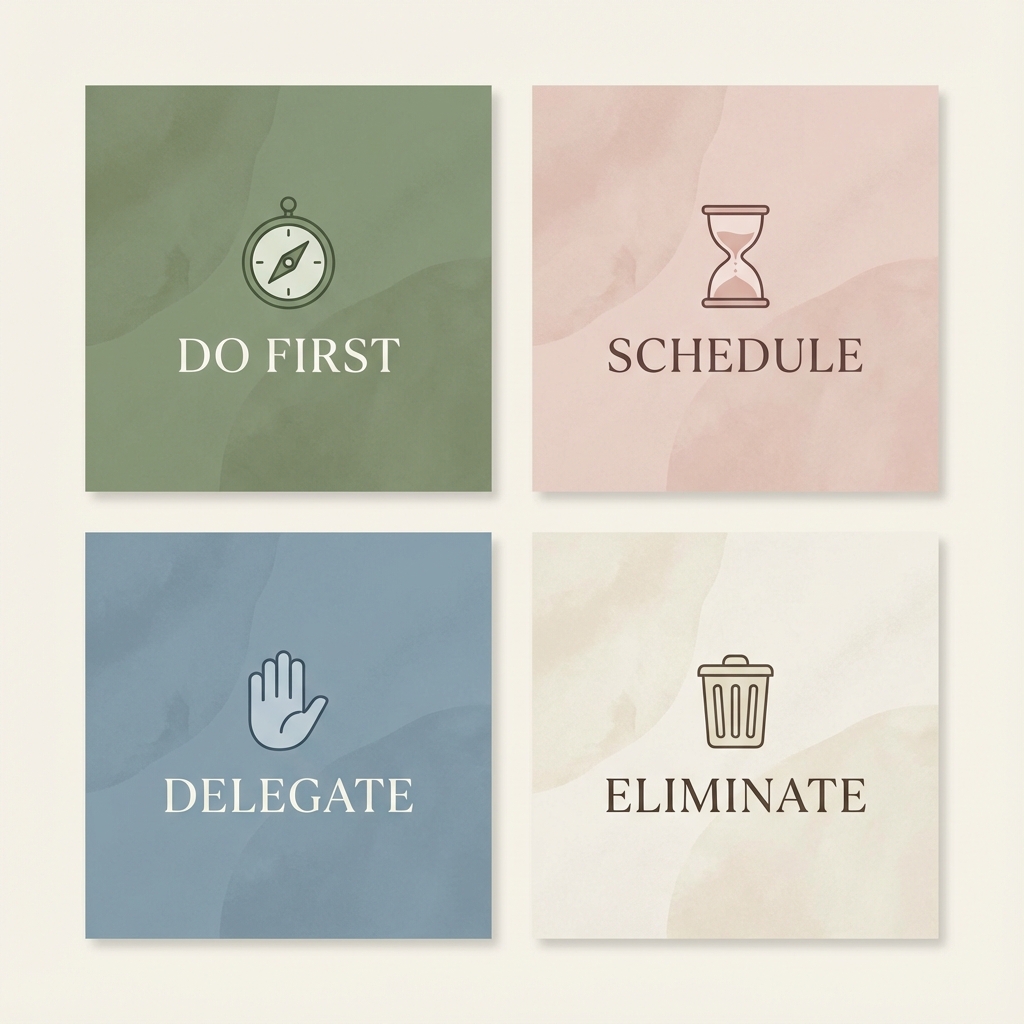
“I have two kinds of problems, the urgent and the important. The urgent are not important, and the important are never urgent.” — Dwight D. Eisenhower.
When everything feels like a priority, nothing is. The Eisenhower Matrix is a simple tool to help you categorize your tasks and take control of your schedule.
The Four Quadrants
1. Urgent and Important (Do)
These are crises and deadlines. They require immediate attention. While unavoidable, a well-managed life seeks to minimize the time spent here by planning ahead.
2. Not Urgent but Important (Schedule)
This is the quadrant of growth. Exercise, deep work, relationship building, and long-term planning live here. This is where you should aim to spend the majority of your time.
3. Urgent but Not Important (Delegate)
These are interruptions—emails, meetings, and requests from others that don’t align with your goals. If possible, delegate these tasks or batch them to minimize their impact.
4. Not Urgent and Not Important (Eliminate)
These are distractions. Mindless scrolling, excessive “busywork,” and time-wasters. In a minimalist lifestyle, these should be ruthlessly eliminated.
Implementing the Matrix
To use this framework, start by listing all your current tasks. Place each one into one of the four boxes. You’ll likely find that your “Schedule” quadrant is empty while your “Delegate” quadrant is overflowing.
The goal is to move from a reactive state (Quadrants 1 and 3) to a proactive state (Quadrant 2).
Focus on Impact
Managing time isn’t just about efficiency; it’s about effectiveness. Use the Eisenhower Matrix to ensure that you aren’t just climbing the ladder of success, but that the ladder is leaning against the right wall.